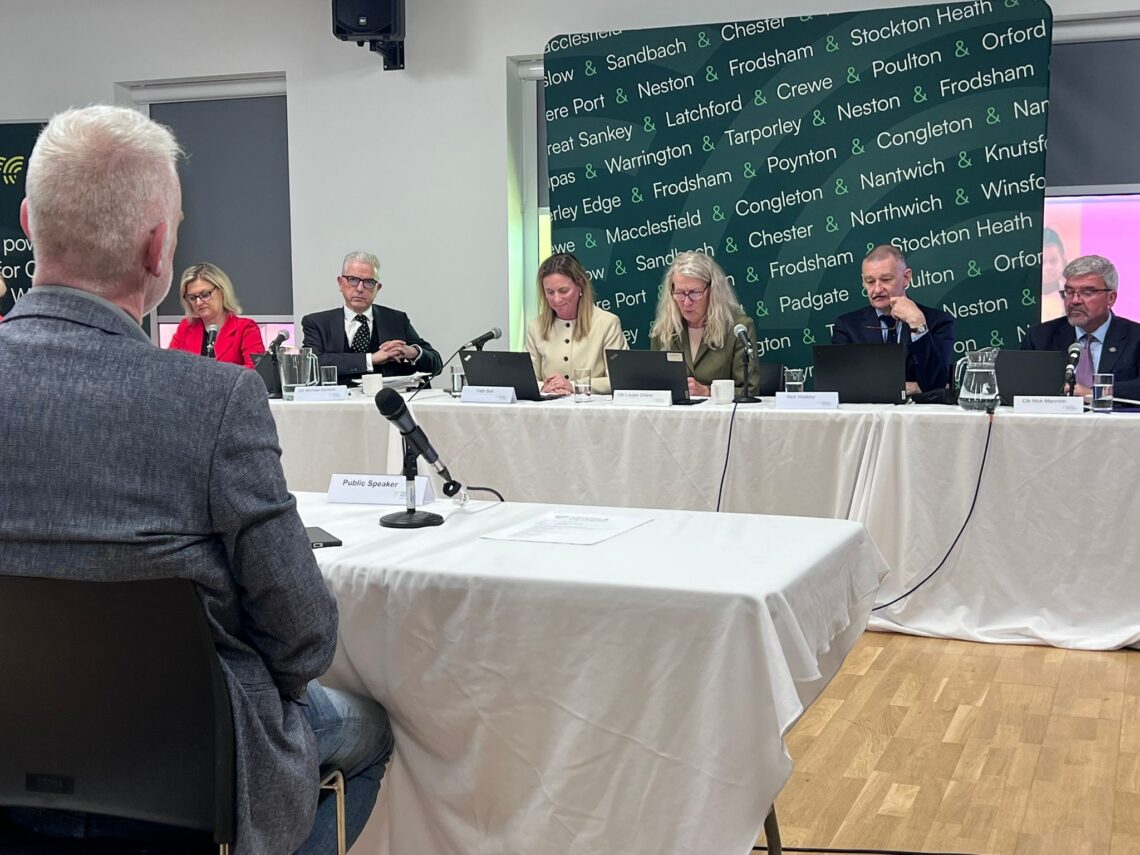
I attended the inaugural Cheshire and Warrington Combined Authority board meeting this week.
I attended the inaugural Cheshire and Warrington Combined Authority board meeting this week. There’s a lot of energy in the room. But more importantly, there’s a clear recognition that this is not about creating another layer of structure. It’s about whether we can actually shift outcomes.
The Get Cheshire & Warrington Working Plan sets the context well. On paper, this is one of the strongest economies in the North. High employment, strong sectors, good earnings. But scratch the surface and the gaps are obvious. We still have over 100,000 people economically inactive. Long-term sickness is rising. Early retirement is a major factor. And there are 65,000+ people on Universal Credit who have been out of work for over a year.
At the same time, employers are struggling to recruit. That disconnect is the real issue. Not a lack of opportunity, but a failure to connect people to it in a way that actually works.
What stood out
The plan is honest about where the problems sit.
It identifies six priority groups, which broadly come down to:
- people disconnected from opportunity
- people held back by health
- people falling through transition points
- and people in places where access simply doesn’t work
This is not new insight. But the difference here is the intent to treat it as a system problem, not a programme problem. That matters, because the current landscape is fragmented. DWP, NHS, local authorities, skills providers, employers, voluntary sector… all doing something, but rarely aligned. The plan calls that out directly and pushes toward a joined-up, locally driven employment system rather than a collection of initiatives.
The real test
The next 12–18 months are critical.
The plan talks about:
- governance to align delivery
- auditing existing provision (and stripping duplication)
- targeted task groups for priority issues
- and moving toward a single strategic employment support model
These are all sensible but this only works if it goes beyond coordination and into control and accountability. Devolution gives Cheshire & Warrington a real opportunity here. Not just to shape policy, but to redesign how the system actually operates on the ground.
That includes:
- how funding flows
- how outcomes are measured
- and how employers are genuinely brought into the solution
The bit that needs more focus
If there is a gap, it’s this, we still risk over-indexing on supporting people into work without equally addressing how employers behave. The plan touches on this, particularly around:
- low investment in workforce training
- lack of progression pathways
- and limited incentives to take on early talent
But this needs to be more central, because without changing employer behaviour, we’re just recycling people through the same system.
Final thought
There is no shortage of strategy in this space. What’s different here is the platform:
- devolution
- aligned partners
- and a clear economic case to act
If this turns into a genuinely integrated system, it will move the dial. If it becomes another well-written plan with loosely connected delivery, it won’t. Simple as that.