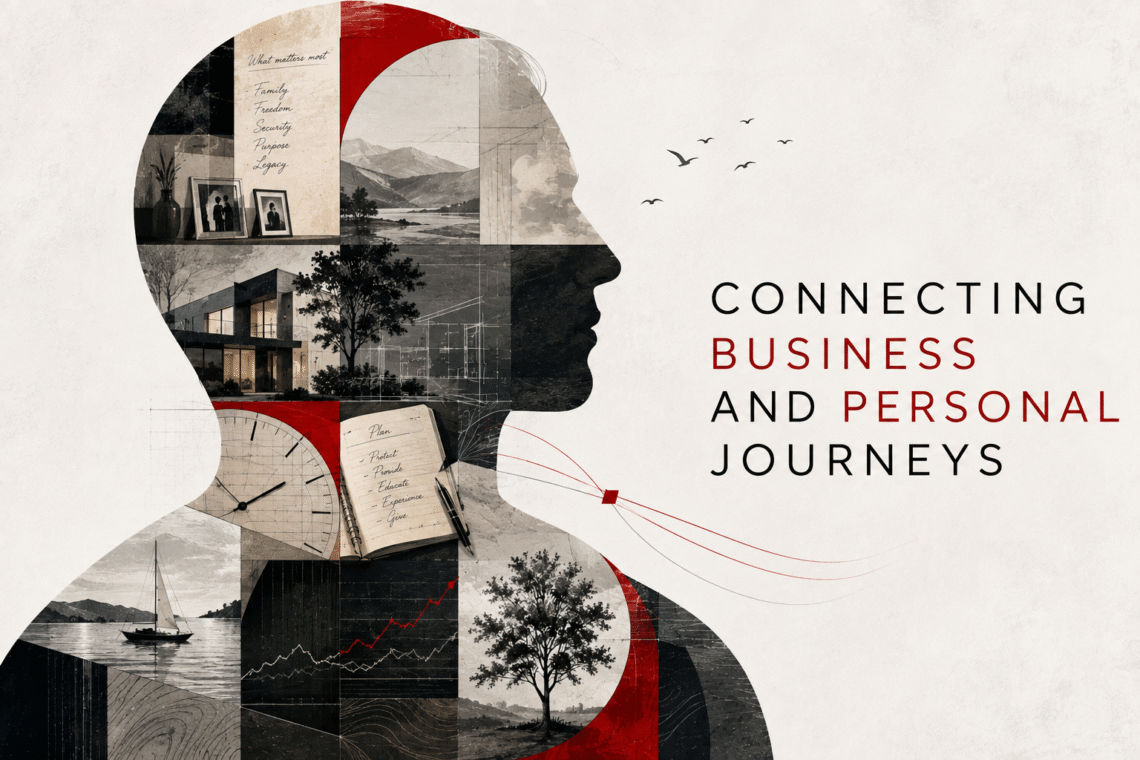
Connecting Business and Personal Journeys
Over recent months, Kognise has been expanding its portfolio of services around a simple principle: businesses need more than advice at isolated points in their development. Whether starting, scaling, restructuring, raising capital, transitioning ownership or preparing for an exit, the different parts of the journey need to connect if the strategy is going to translate into a successful outcome.
That thinking led to the introduction of Kognise Delivery Operations™, providing the coordination and delivery structure that larger corporates typically have internally but which startups, SMEs and many advisory businesses simply do not have the capacity to provide. Identifying what needs to happen is only part of the job; there also needs to be sufficient structure around the business to organise the work, maintain momentum and get it delivered.
We have also increased the sophistication of our capital work. Traditional funding tends to be approached as a transaction: identify the requirement, find the capital and complete the raise. Our Capital Journey™ looks across several years, understanding where capital is likely to be required and how different forms of funding might support each stage. That could include equity, lending, asset finance, structured funding or bonds, as well as hybrid structures combining several sources. There may be one capital event or several, but they form part of the same longer-term strategy rather than a series of disconnected transactions.
The natural extension is to consider the journey of the people behind those businesses. Their personal aspirations, responsibilities and financial objectives don’t sit independently of the commercial decisions being made, and understanding both creates a more complete picture of what a successful outcome actually looks like.
The personal journey behind the business
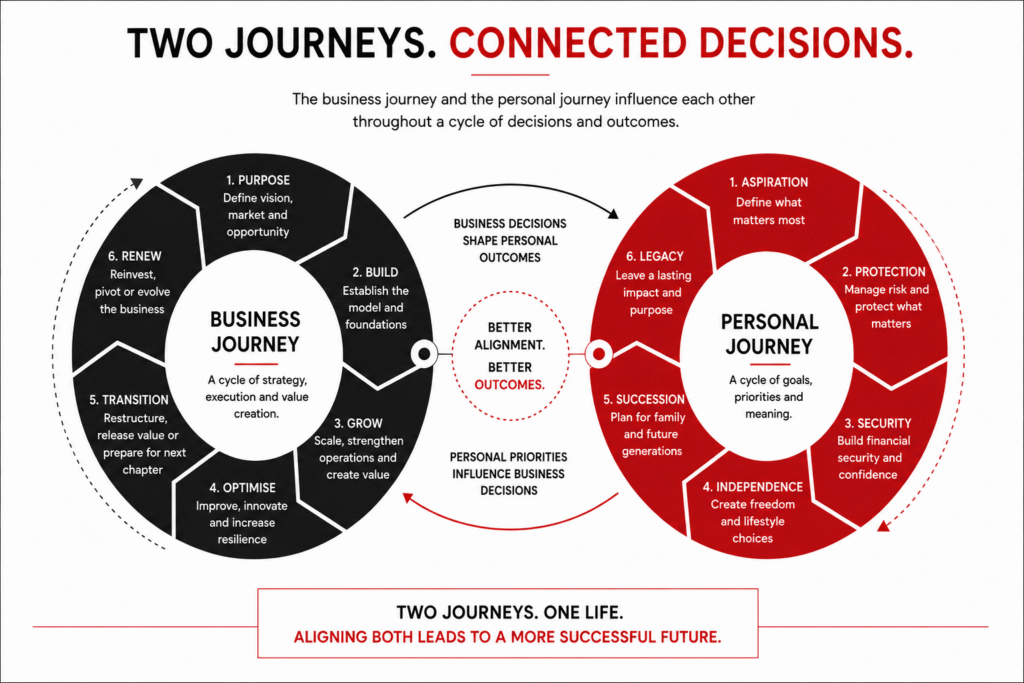
Every business has people behind it with their own ambitions, responsibilities and financial objectives. Those considerations can materially influence decisions about growth, investment, ownership, risk, restructuring and exit, yet they are often addressed separately from the strategy being developed for the company.
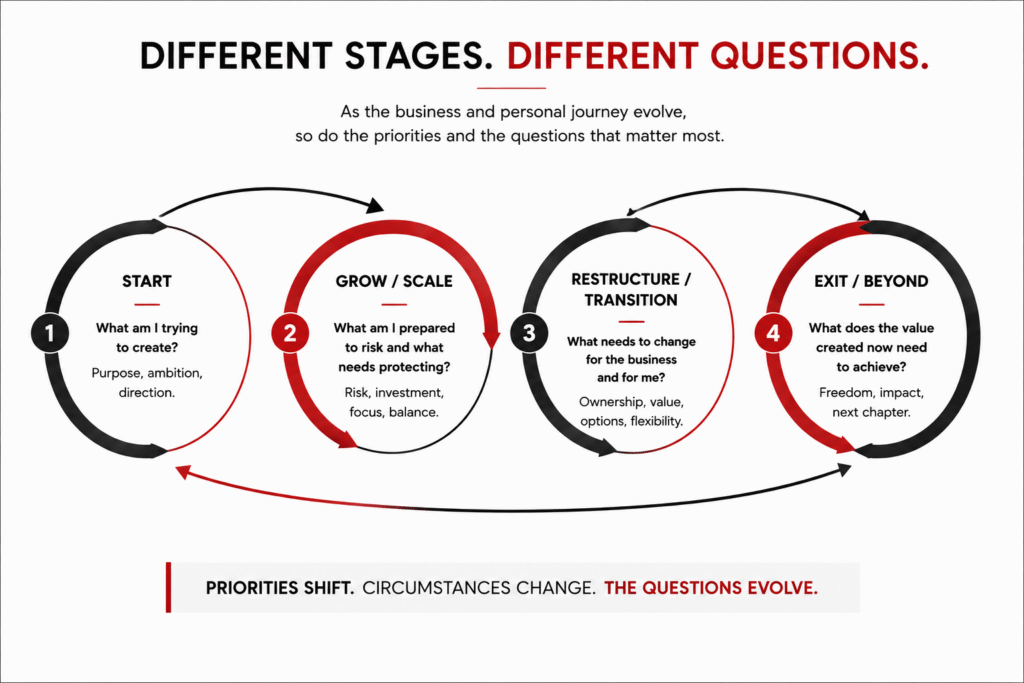
The questions will be different depending on where somebody is in that journey. A founder starting a business may be considering what they ultimately want to create, how much risk they are prepared to take and what success might look like over the longer term. Someone scaling an established company may be considering external investment, dilution, personal guarantees, family security or how much of their wealth they are comfortable having concentrated in the business.
Further along, the priorities may move towards restructuring ownership, releasing value, succession or reducing the company’s dependency on its founder. At exit, the questions change again: what financial position needs to exist once the business has been sold, what income and lifestyle need to be supported, what needs protecting and what does the next stage look like?
These considerations help define what a successful business journey needs to deliver and can influence the decisions made along the way.
Defining success beyond the business
Business is very good at putting numbers against success. Revenue, EBITDA, valuation and exit value are measurable and relatively straightforward to build into a plan, but they don’t necessarily tell us what achieving those numbers is supposed to accomplish for the people who have created the business.
A £10 million exit is a financial outcome. What matters personally is what that value needs to enable: financial independence, family security, a particular lifestyle, retirement, another business venture, intergenerational wealth or something entirely different. For someone else, selling may not be an objective at all; they may want to continue building the company while creating greater financial independence outside it.
The same principle applies much earlier. Someone creating a startup with the intention of building an asset for eventual sale is likely to make different decisions from somebody creating a business they intend to own for the next 30 years. Understanding the personal destination provides useful context for deciding what the business should become and how it should get there.
The questions change over time
The personal financial journey doesn’t suddenly become relevant when somebody approaches retirement or decides to sell. At startup, the considerations may be income, personal commitments, risk and protection. As the company develops, ownership, borrowing, external investment and the concentration of personal wealth within the business become more important. Later, the focus may move towards financial independence, succession, liquidity, family wealth and legacy.
Personal circumstances change as well. Marriage, children, illness, caring responsibilities and other significant events can alter priorities, financial requirements and appetite for risk. A business strategy that was entirely appropriate five years earlier may need to change because the objectives or circumstances of the people behind it have changed.
Introducing Values-Based Financial Planning™
Kognise is now extending its proposition via a collaboration with a highly respected and soon to be announced partner business that will help us connect business and personal journeys to incorporate specialist expertise around the personal financial journey, using an approach based on Values-Based Financial Planning™. Rather than starting with financial products, investments or pensions, the process begins by understanding the individual: what matters to them, what they want their life to look like, their responsibilities and what they ultimately want their business and accumulated wealth to enable them to achieve.
From there, financial planning can be built around those objectives. This can include lifestyle requirements, family commitments, protection and insurance, assets and liabilities, investments, pensions, financial independence, succession and longer-term legacy. The purpose is not simply to establish somebody’s financial position today, but to understand where they want to get to and what needs to be considered along the way.
For business owners, that creates an important connection. Decisions around funding, growth, ownership, restructuring and exit can have significant personal financial consequences, while personal objectives can equally influence what represents the right decision for the business.
Some of the conversations involved in Values-Based Financial Planning™ are necessarily probing and highly personal, and they sit outside the role of a Kognise adviser. The new service will therefore create two distinct and confidential relationships: Kognise will continue to work with the company on its business, delivery and capital journey, while the personal financial planning will be undertaken separately by a specialist partner.
The two sides do not need unrestricted access to each other’s information for the model to work. If an owner wants to achieve financial independence within a particular timeframe, for example, that objective may be relevant to decisions around growth, capital, ownership or exit without Kognise needing access to the detailed personal finances behind it. In the other direction, relevant business objectives can inform personal planning without unnecessarily sharing commercially sensitive company information.
A more complete proposition
There is a deliberate progression in the way the Kognise portfolio is developing. Kognise Delivery Operations™provides the structure needed to turn strategy into coordinated delivery, while the Capital Journey™ takes funding beyond the immediate transaction and considers how the business may need to be financed over time. Adding our new partnership with a specialist to deliver Values-Based Financial Planning™ brings the individual into that wider picture, connecting the creation of business value with what the people behind the business ultimately want that value to achieve.
This is relevant at any point in the business lifecycle. Someone considering their first startup will have very different requirements from an owner running a scale-up, restructuring an established company or preparing for sale, but in each case the commercial decisions and personal objectives are connected. Bringing those perspectives together should provide a better basis for making decisions without confusing the roles or compromising the confidentiality of either relationship.
We will be sharing more details re our new partner and launching the new service shortly. It represents another step in broadening the Kognise proposition around the complete journey rather than individual pieces of advice, helping clients connect the development and value of their business with the personal objectives that sit alongside it.