
Funding is more than a transaction
Access to capital can determine how quickly a business grows, what opportunities it can pursue and how much control its founders and shareholders retain along the way. But funding is rarely as simple as choosing between debt and equity. Different stages of growth, different uses of capital and different business models can require very different funding structures. The right solution may involve equity, debt, asset finance, grants, project finance or a combination of several sources deployed over time.
At Kognise, we approach funding as part of the wider business strategy. We start with what the business is trying to achieve, understand the capital required to get there, and then consider how that requirement can be structured and funded. The objective isn’t simply to fund the next transaction. It is to build a capital strategy capable of supporting the business through its next stage of growth — and beyond.
Different capital for different requirements
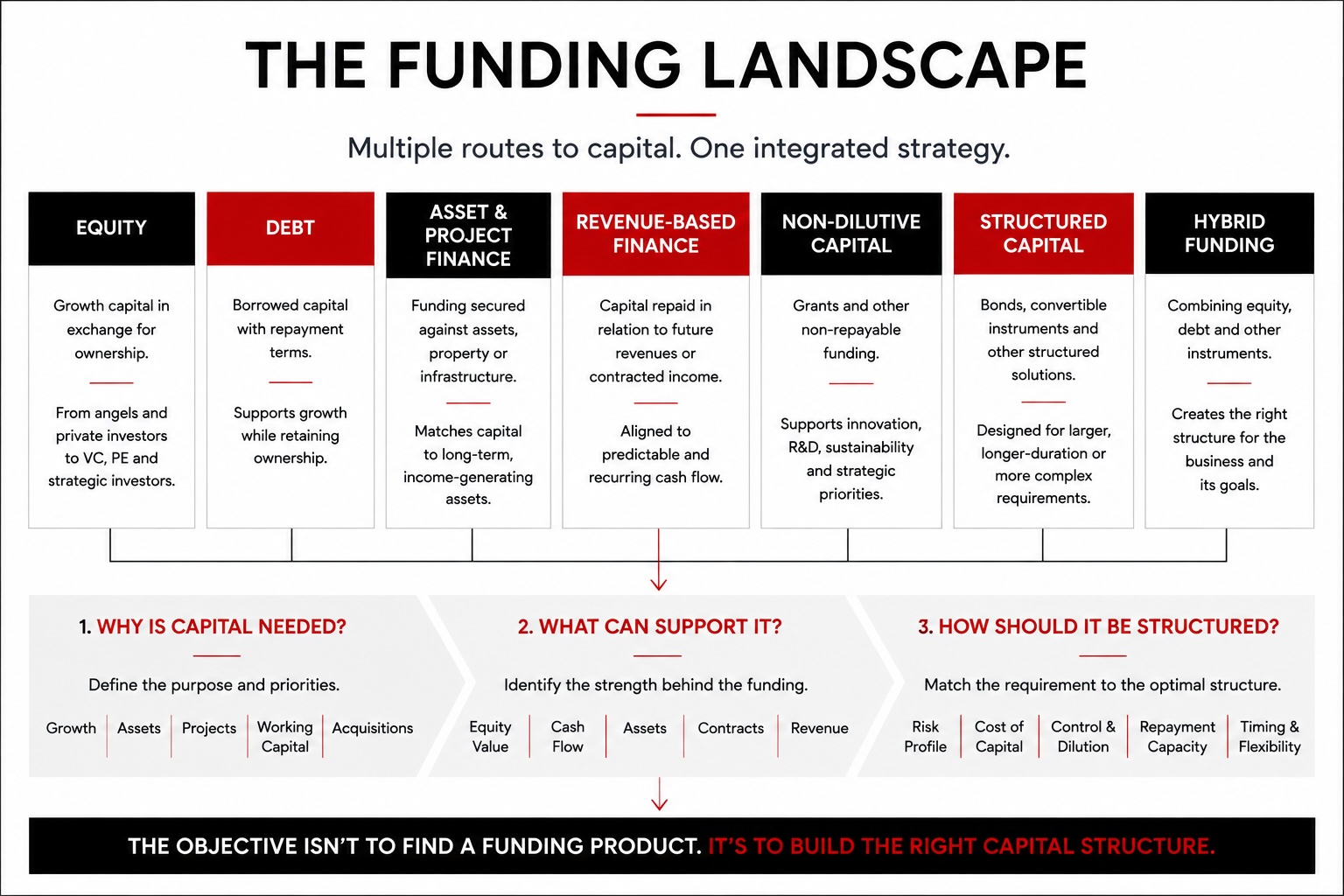
There is no single ‘best’ form of funding. The appropriate structure depends on the business, its stage of development, the purpose of the capital, its ability to service debt and the level of risk investors or lenders are being asked to take.
- Equity: Capital invested in return for ownership in the business. Equity can support significant growth without creating an immediate repayment obligation and can range from angel and private investors through to family offices, venture capital, strategic investors and private equity. The trade-off is dilution, making valuation, timing and investor selection important parts of the decision.
- Debt: Borrowed capital allows shareholders to retain ownership but introduces repayment obligations and financing costs. Debt can take many forms and becomes increasingly relevant where a business has predictable revenues, assets, contracts or cash flows capable of supporting it.
- Asset & Project Finance: Not every capital requirement needs to be funded from the company’s balance sheet or through new equity. Equipment, property, infrastructure and revenue-producing assets can sometimes be financed separately, reducing the amount of equity required to support growth.
- Revenue-Based Finance: Businesses with established and predictable revenues may be able to raise capital against future income. This can provide an alternative to conventional borrowing or equity, particularly where there is sufficient visibility over recurring or contracted revenues.
- Grants & Non-Dilutive Capital: Grants and other non-dilutive programmes can provide valuable capital without surrendering equity. They are particularly relevant to businesses working in areas such as innovation, technology, research, sustainability and economic development, although eligibility and availability vary considerably.
- Structured Capital: Larger or more complex funding requirements may require a purpose-built structure rather than a conventional loan or equity round. Depending on the business and underlying opportunity, this can include instruments such as bonds, convertible structures, project finance and other forms of structured debt or investment.
- Hybrid Funding: Increasingly, the answer is not one funding source. Combining equity, debt, asset finance, grants and other instruments can reduce dilution, improve the overall cost of capital and match different funding requirements with the most appropriate source.
The funding requirement is not necessarily the funding solution
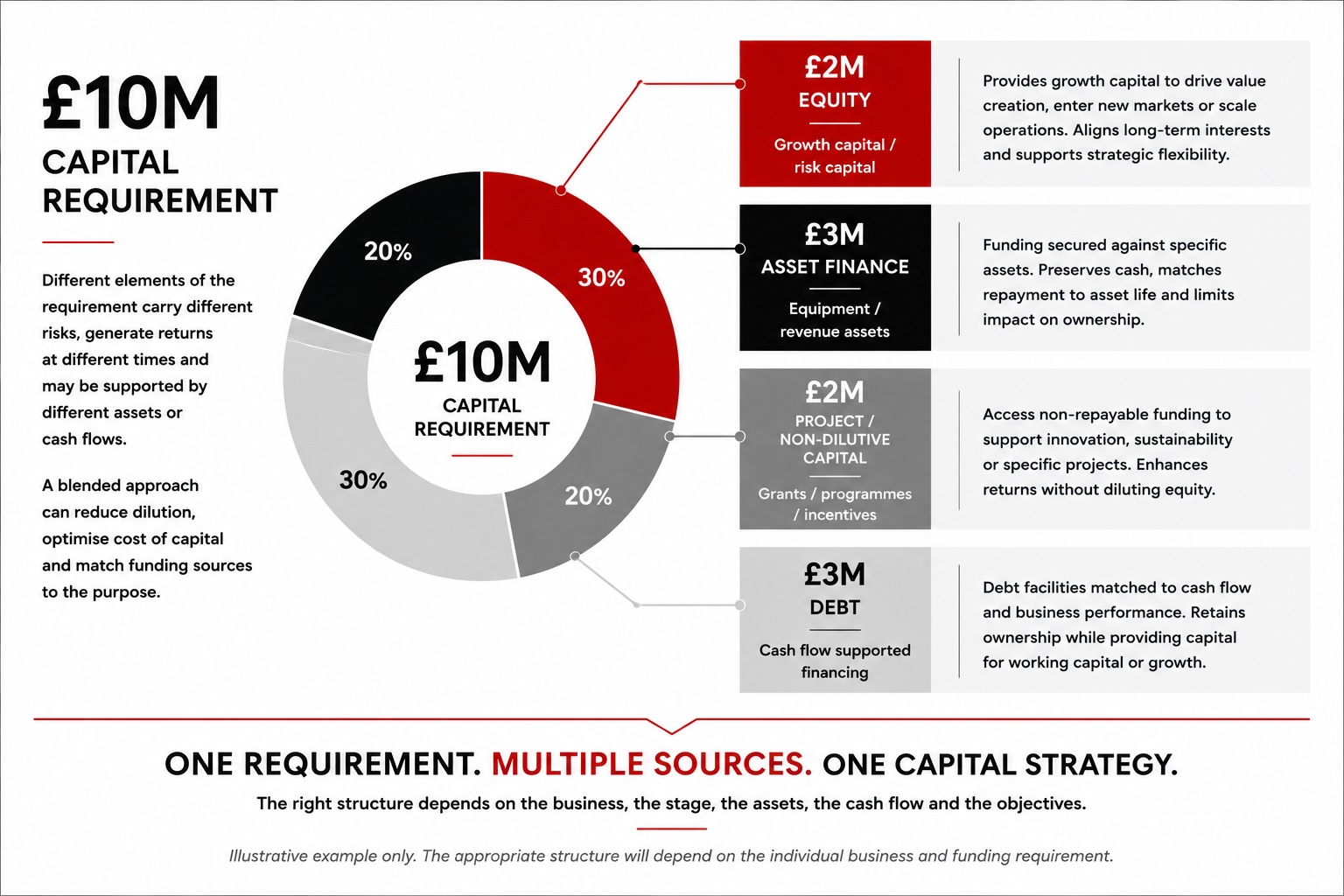
A business requiring £10 million does not necessarily need a £10 million investor. Different elements of the requirement may carry different risks, generate returns at different times or be supported by different assets and revenues. Breaking the requirement down can create a more efficient capital structure.
From funding requirement to capital strategy
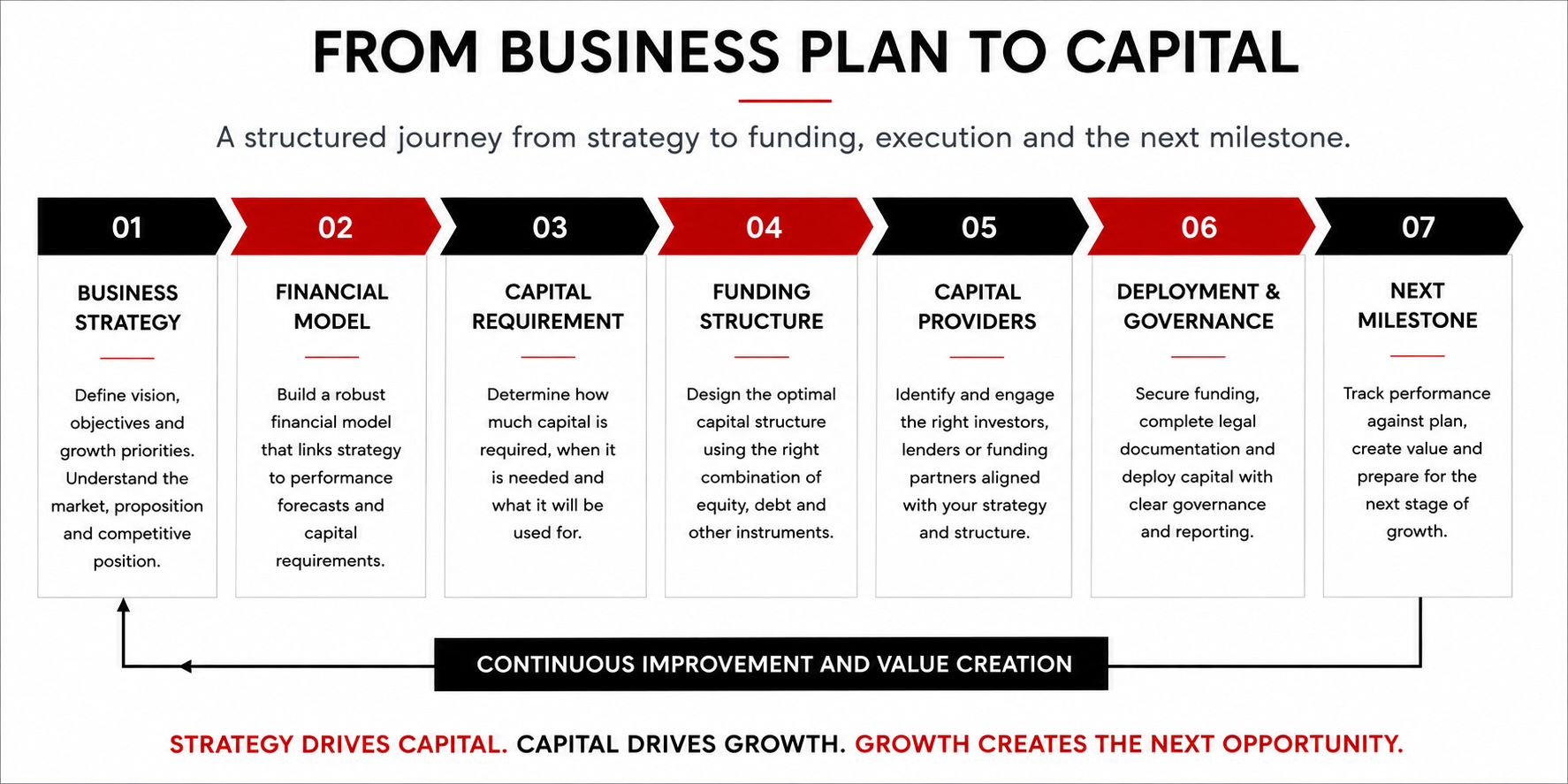
Kognise does not begin with a funding product. We begin with the business. That means understanding the strategy, financial model, existing capital structure, growth plan and future milestones before determining what capital is required and how it might appropriately be structured.
This can include assessing:
- how much capital is actually required;
- when it needs to be available;
- what the capital will be used for;
- which elements can support debt or asset finance;
- where equity is genuinely required;
- the implications for dilution, control and cash flow; and
- how today’s funding decision affects the next stage of growth.
The result is a capital strategy aligned to the business rather than a business being reshaped around a particular source of funding.
Funding is a journey, not a transaction
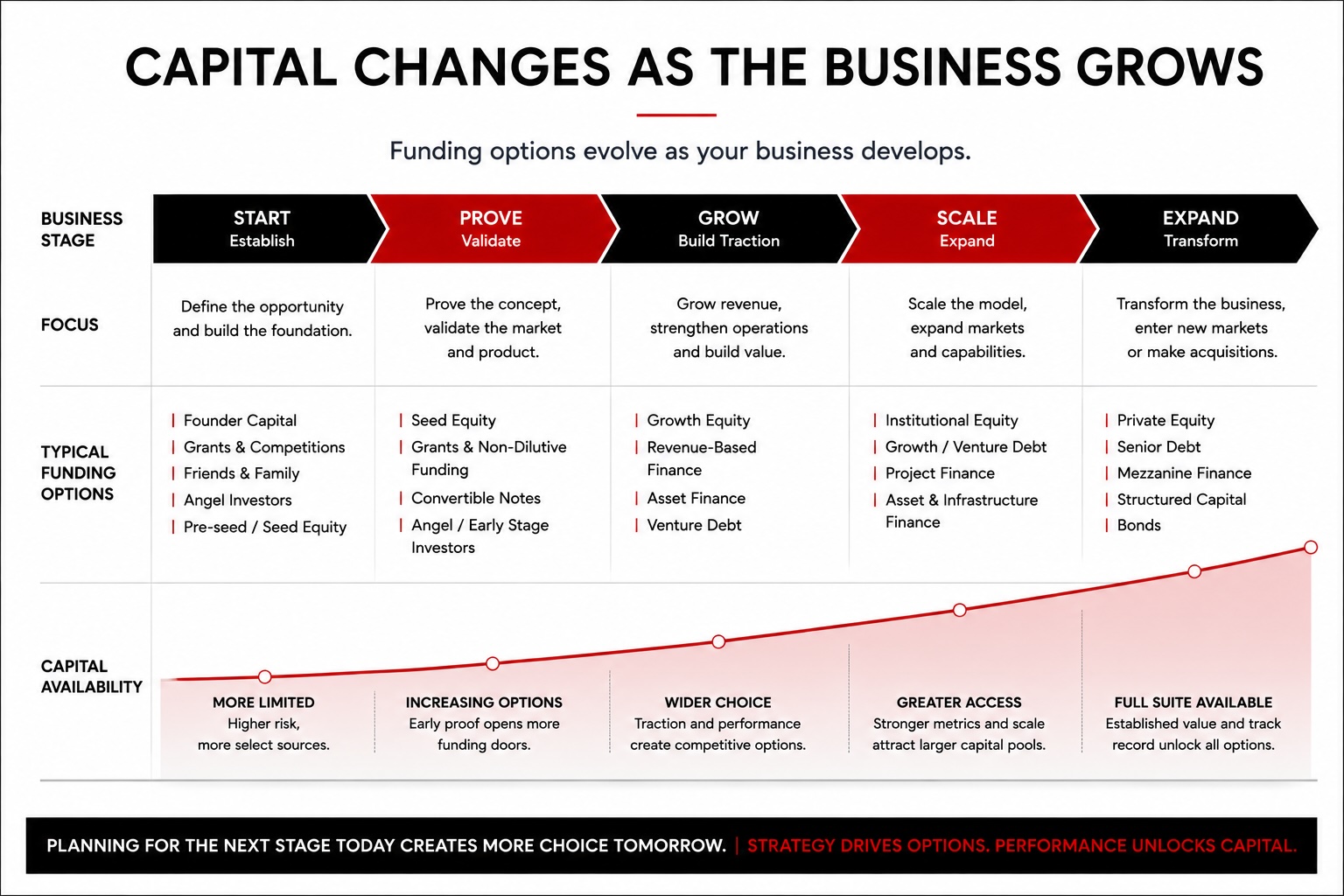
Growing businesses frequently require more than one funding event. The capital used to prove a concept may be very different from the capital required to scale it. As revenues, assets, contracts and enterprise value develop, new funding options can become available. Planning for those stages in advance can help businesses manage dilution, financing costs, control and risk while ensuring that capital supports the underlying growth strategy.
Building a capital strategy?
Explore The Growth Cycle to see how Kognise connects strategy, investor readiness, capital and post-funding execution.